La norme de contenu des données définit les éléments de données essentiels et les ensembles de valeurs nécessaires aux Soins connectés. Elle précise les types de données à recueillir (p. ex. diagnostics) ainsi que le langage et les formats à utiliser (p. ex. codes de la SNOMED CT).
The Data Content Standard defines essential data elements and value sets necessary for Connected Care. It specifies the types of data to be collected, such as diagnoses, and the languages and formats to be used, such as SNOMED CT codes.
L’Ensemble de données de base pour l’interopérabilité au Canada est un sous-ensemble du Cadre pancanadien de contenu des données sur la santé qui définit un jeu normalisé d’éléments de données et d’ensembles de valeurs sur la santé dans le contexte d’une architecture commune pour permettre l’interopérabilité dans les systèmes de santé canadiens.
A subset of the Pan-Canadian Health Data Content Framework, the Canadian Core Data for Interoperability defines a standardized set of health data elements and value sets in the context of a common data architecture to support interoperability across Canadian health care systems.
The Logical Data Model is a semantically rich, fully attributed model that organizes and standardizes key health concepts and supporting information concepts, as well as describes how they relate to each other and to the real world. It is a foundational component for data storage and data management, including data exchange. The model is designed to support future development while still reflecting current real-world scenarios.
The Metamodel shows how the many products of the Pan-Canadian Health Data Content Framework are structured and relate to one another.
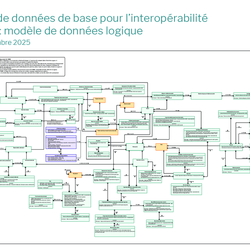
Représentation des éléments de l’EDBIC sous forme de modèle de données logique illustrant les entités, les attributs, les relations et les contraintes.
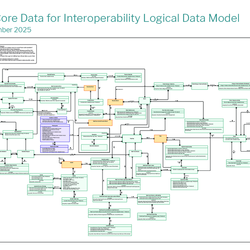
A logical data model representation of the CACDI elements with entities, attributes, relationships and constraints.
The Common Data Model Implementation Guide serves to points out nuances and consideration in the common data model for vendors, implementors and other audiences.
The Information Model is a high-level model that establishes subject areas for organizing and showing relationships between the concepts in the Data Content Standard.
The Business Context Model defines the scope, people, organizations and systems that influence, collaborate, inform and consume the Pan-Canadian Health Data Content Framework.
Le glossaire comprend les termes, définitions, relations sémantiques et règles administratives qui décrivent les concepts cliniques et d’architecture. Il établit une terminologie normalisée afin de favoriser une communication claire et une compréhension commune des termes à l’échelle des systèmes de santé du Canada.
The Business Glossary provides terms, definitions, semantic relationships and business rules describing clinical and architecture concepts. This glossary establishes a standard vocabulary to support clear communication and common understanding of terms across Canadian health systems.
The Business Rules are formally stated constraints governing the characteristics of data. These constraints may be used to validate data and support consistent, semantically interoperable, high-quality point of care data capture and sharing by systems across Canada.
The Use Cases are designed to support the Logical Data Model. These business scenarios provide a link to real-life clinical events in a variety of health care settings. Each use case sets the context of pre-existing conditions, defines key actors, outlines their interactions and provides alternative outcomes to the encounter.
This site is for collecting community feedback on documents.